-
Recent Posts
Recent Comments
- jim cotter on “Into Eternity” – The Final Free Film In SAPL’s “Nuclear Dangers: Past, Present & Future” Film Series
- Herb Moyer on About SAPL
- Herb Moyer on NRC FREEZES ALL NUCLEAR REACTOR CONSTRUCTION & OPERATING LICENSES IN U.S.
- beton on NRC FREEZES ALL NUCLEAR REACTOR CONSTRUCTION & OPERATING LICENSES IN U.S.
- Herb Moyer on Nuclear ‘Hard to Justify’, Says General Electric Chief
Archives
Categories
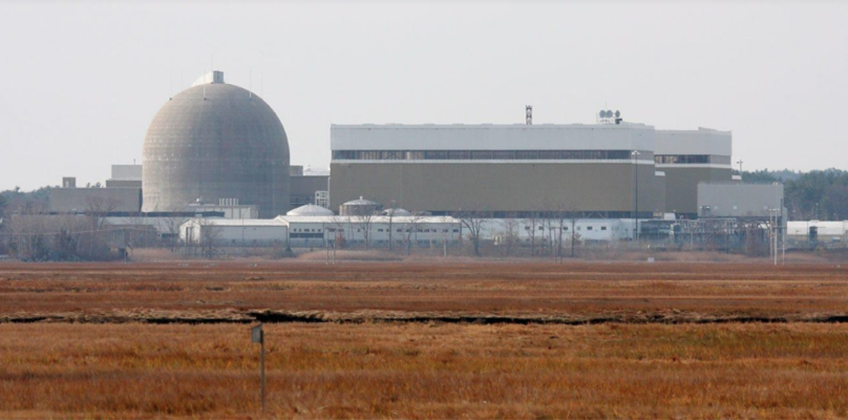
The Union of Concerned Scientists and C-10 Research and Education Foundation Call On the NRC To Conduct Thorough Concrete Analysis Tests At Seabrook Nuke
Posted in Uncategorized
Leave a comment
Using Your Hybrid Car To Power Your Home
Seacoast Anti-Pollution League
Providing Alternative Energy Solutions
PO Box 1136, Portsmouth, NH 03802
SAPL has partnered with a firm providing DC/AC Plug-Out Inverter Kits for hybrids. A cable
connection is installed on the car’s Lithium battery pack, and the homeowner (or electrician)
installs a similar connector on the outside of the home. The other end of that cable connects
to the inverter in the garage or cellar, which is then wired to a Transfer Switch that is wired
to the desired circuit breakers at the main electrical panel. When the utility power goes out,
homeowner simply connects the cable between the car and the house, starts the car leaving
it in Park, pushes the “ON” switch at the inverter, and flips the main Transfer Switch from the
utility feed side to the car/generator feed side. The car turns on/off as power is needed.
My Prius Hybrid now powers my
home when we have a power outage.
Call SAPL for details 603-431-5089.
Total cost: Approx. $2,100
Inverter units can be portable for:
Power during a camping trip
Running power equipment at a job site
A portable PA system
A portable music concert amplification
system
Portable life-support systems
Remote environmental monitoring
equipment
3,000
Watt
(3KV)
Unit
Larger/smaller
Units Available
Your call will be returned
www.saplnh.org
E-mail: herb.moyer@comcast.net
Decentralized Power for All
PO Box 1136
Portsmouth, NH 03802
Phone: 603-431-5089
Posted in Uncategorized
Leave a comment
Wind Power Coming Close To Fruition
Wind power coming close to fruition
By Jennifer Keefe
Special to the Sunday Citizen
Sunday, February 24, 2013
DOVER — Imagine powering the entire state of Maine without
using fossil fuels.

A 61-foot prototype for an offshore wind farm planned for the waters off the coast of Maine sits outside the Offshore Wind Laboratory at the University of Maine’s Advanced Structures and Composites Center. It is slated to be placed at its offshore test site in May. Courtesy photo
Two pilot projects are working toward doing just that with offshore wind farms, projects that could result in a whole new industry for the Pine Tree State.
“In the U.S., we have a large offshore wind resource,” said Habib Dagher, director of the University of Maine’s Advanced Structures and Composites Center. “There’s about 4,000 gigawatts offshore — that’s enough to power the U.S. four times over.”
Dagher has been working on a prototype for an offshore wind farm for five years.
According to Dagher, there are 156 gigawatts just 50 miles off Maine’s shore, which is equal to 156 nuclear power plants. It takes 2.4 gigawatts to power the entire state.
And a major development in the university’s project is taking place in just a few months.
A fabrication of the turbine unit will be completed in April and towed from the Penobscot River to a test site off the coast of Maine in May. There, it will be anchored by pre-existing mooring lines.
This prototype, called VolturnUS, is about 61 feet high, Dagher said, and will be used to test the floating wind technology.
“If all goes well, this will be the first offshore wind turbine in the U.S.,” he said.
A separate pilot project called Hywind Maine, led by Norwegian energy company Statoil, is planned for federal waters off the coast of Boothbay Harbor.
This project just cleared a major hurdle with recent approval by the Maine Public Utilities Commission to support the project and provide an above-market rate.
Patrick Woodcock, director of Gov. Paul LePage’s Energy Office, said the PUC vote was a “significant decision,” but the governor’s office has consistently expressed concern about these projects increasing energy costs.
“We have concerns about the rate impact on electricity bills,” Woodcock said, adding the plan is also “vague” about the economic benefits brought into Maine from the developer.
Statoil has established a relationship with UMaine’s Advanced Structures and Composites Center.
Both projects have received about $4 million in funding from the Department of Energy, having been chosen among seven out of more than 70 applicants in a DOE competition for advanced technology for offshore wind.
The DOE will pick three out of those seven to receive the remaining funding.
In 2012, LePage put a hold on bonds to rein in state borrowing, which included funding for the offshore wind project. However, Dagher said they have partners backing the project who will match the costs.
The university’s full-scale unit — slated to be in the water by 2016 — would consist of two 6-megawatt machines that would float off Monhegan Island in about 200 feet of water and be grid-connected to shore.
Dagher said the whole unit is taller than the Washington Monument, and each blade is bigger than the wingspan of a Boeing 747.
The third phase, which is slated to be up and running by 2020, would be eight turbines producing about 500 megawatts from 20 miles offshore.
And by 2030, Dagher said the goal is a full-scale wind farm of about 170 turbines that would supply a total of about 5 gigawatts to the state of Maine.
“That could be used to put on grid in New England, throughout the region,” he said.
He said a cost-effective wind farm would keep electricity prices at about 10 cents per kilowatt hour by 2020.
He said the process is a “walk before you run” approach, but the overall intent is to greatly reduce dependence on fossil fuels.
“We want to keep some dollars in Maine by using our own resources,” Dagher said, noting the high costs of gas and heating oil. “We have no control over the cost of that energy over the long run. You can see why we’re looking at ways to cost effectively bring this energy back to shore.”
He said the energy could be used “in a variety of ways,” but the intent is to heat homes, or provide electricity for electric cars.
“Our goal here is to reduce our reliance on fossil fuels and help stabilize these prices over the long run,” Dagher said. “These are very volatile prices. By diversifying energy infrastructure in the region, we’ll reduce costs in the long run. The New England region is very dependent on natural gas for electricity, but when you’re so dependent on one resource, you’re exposing the region to the danger of price increases or that resource becoming obsolete.”
He said more than 98 percent of the 2,500 residents who responded to a survey conducted by the University of Maine about the project were in support of deepwater offshore wind farms that are not visible from the shore.
Posted in Alternative Energy, Uncategorized, Wind Energy
Leave a comment
NRC Public Meeting on Seabrook Concrete Problem, 12/11 7PM in Hampton, NH
The NRC is holding a public meeting (not a formal hearing) to update the public on its efforts to address concrete degradation (ASR) at the Seabrook plant. A poster session will start at 5:30 PM and the public meeting will begin at 7 PM. This is a unique opportunity to informally pose questions about plant safety to NRC officials.
1 Liberty Lane East, Hampton, New Hampshire 03106
Posted in Uncategorized
Leave a comment
“Into Eternity” – The Final Free Film In SAPL’s “Nuclear Dangers: Past, Present & Future” Film Series
Please come to a free showing of
Into Eternity
An award-winning documentary on the challenges of building a permanent repository for high-level nuclear waste
Wednesday, September 26th at 6:30 PM
Portsmouth Public Library – Levenson Room, 175 Parrott Ave. (near the Portsmouth Middle School)
This is the last film in the “Nuclear Dangers – Past, Present, and Future” film series sponsored by the Seacoast Anti-Pollution League (SAPL) and will feature audience discussion after the film. It is free and open to the public.
The film has particular relevance for New Hampshire residents, since with the demise of the Yucca Mountain repository project in Nevada, a “plan B” approach could involve a granite formation repository, as was previously explored 27 years ago in Hillsborough, NH and in Maine. The Seabrook plant has generated over 500 tons of highly radioactive spent fuel so far, all of which is stored on site.
For more information, contact SAPL at 603-431-5089 or visit their website: www.saplnh.org
MORE ON THE FILM:
Into Eternity is the first feature documentary to explore the mind-boggling scientific and philosophical questions long-term nuclear waste storage poses. Structured as a message to future generations, the film focuses on the Onkalo waste repository now under construction in Finland, one of the first underground storage facilities. Onkalo is a gigantic network of tunnels being carved out of bedrock that will start receiving Finland’s nuclear waste in 2020. Once the repository is full, in about 100 years, it will be closed and hopefully remain sealed for at least 100,000 years. Into Eternity takes viewers deep into the Onkalo facility as it is being constructed and asks Onkalo representatives, scientists, theologians and others to address fundamental but challenging questions.
REVIEWS
“CRITICS’ PICK. I am tempted to call Into Eternity the most interesting documentary, and one of the most disturbing films, of the year so far… the way the movie and the people in it express their concern gives it a feeling of sublimity unusual in most environmentalist documentaries.”
- A.O. Scott, New York Times
“It might seem crazy, if not criminal, to obligate 3,000 future generations of humans to take care of our poisonous waste just so that we can continue running our electric toothbrushes. But it’s already too late to wave off the nuclear age, and Mr. Madsen’s film comes at a perfect time to join a worldwide conversation about what to do with its ashes.”
- Dennis Overbye, Science Reporter, New York Times
“Excellent. The haunting Into Eternity…is a rare hybrid: an information-packed documentary crossed with an existential art film. In a deceptively low-key manner, Danish filmmaker Michael Madsen has beautifully crafted one of the most provocative movies of the year.”
- San Francisco Chronicle
“Tackles a subject almost beyond comprehension …. one of the most extraordinary factual films to be shown this year. Why isn’t every government, every philosopher, every theologian, everywhere in the world discussing Onkalo and its implications?”
- Peter Bradshaw, The Guardian (UK)
“Recommended. What animates the film is the other worldliness of the under-construction project, and the paradoxes the finished Onkalo will embody. If Onkalo succeeds, it will become the longest-lasting product of contemporary civilization – which it might very well outlive.”
- Mark Jenkins, NPR.org
AWARDS & SCREENINGS
Grand Prize, Paris Int’l Environmental Film Festival (FIFE)
Grand Prize, Vision Du Reel – Nyon
Green Screen Award, IDFA, Amsterdam
Official Selection
Tribeca Film Festival
San Francisco Green Festival
# # #
SAPL “Nuclear Dangers” Film Series
The next free film to be shown in the Seacoast Anti-Pollution League series:
“Knocking on The Devil’s Door – Our Deadly Nuclear Legacy”
(this film replaces the planned new film “The Atomic States of America”-not yet released)
September 12, 2012 6pm-8pm at the new Kingston Public Library; 169 Main Street Kingston, NH 03848
(603) 642-3521 www.kingston-library.org
There were Three Major Unanswered Questions About Nuclear Power in the 1950’s:
- Can we guarantee that there will not be a major accident and a meltdown of a reactor ?
- Is there a guarantee that the low level radiations that come out of these reactors are harmless ?
- Do we have a way to deal with deadly nuclear waste ?
The answers to these three questions is still “NO”
Come to the free film showing and learn about the following:
Corruption within the nuclear industry; major corporations convicted of fraud and other illegal acts, but continue to be allowed to receive taxpayer subsidy guarantees to build new nuclear facilities
The truth about the health effects upon people caused by the radiation releases from the accidents at Three-Mile-Island, Chernobyl, and Fukushima.
The continuing worldwide threat posed by the radioactive spent fuel pools at the Fukushima Daiichi nuclear plants
The present availability of alternative energy technologies to replace much of the installed nuclear base in the world
The conspiracy to suppress evidence of the dangers of nuclear radiation and the effects of the major nuclear accidents that have happened so far
The fallacy of a “clean” nuclear industry poised to save us from global warming
Corporate media lies about the nuclear industry, nuclear plant safety, and the harmlessness of nuclear radiation
The fact that the nuclear industry has spent close to $100 Billion on nuclear plants that have never operated for a single day.
The biological effects of different types of radiation
Depleted Uranium dust from Desert Storm 1 that is causing childhood cancers, infertility and gross fetal deformities
The nuclear power-nuclear weapons connection
The nuclear threat to all life on this planet
The Nuclearization and weaponization of outer space
The fact that Hopelessness in the population is viewed as a corporate asset
The nuclearization of our Democracy
The fallacy of our “Atoms for Peace” program
The “Nuclear Pinocchios” of the media industry
The public impact of activist opposition on the nuclear industry
The nuclear industry isn’t even built on the crumbling concrete such as is found at the Seabrook “nuke”; it is built upon lies
These are some of the experts interviewed in the film:
Dr. Michio Kaku, Professor of Nuclear Physics, CUNY
Ernest J. Sternglass, Ph.D, Professor Emeritus – University of Pittsburgh, Director of the Radiation and Public Health Project
Dr. Helen Caldicott, Pediatrician & Founding President of the Nuclear Policy Research Institute
Harvey Wasserman, Activist and Author of Solartopia! Our Green-Powered Earth
Dr. Vandana Shiva, Nuclear Physicist
Dr. Alexey Yablokov; his study determined that almost 1 million people have died as a result of the Chernobyl accident
Greg Palast, Investigative Reporter of Corporate Crimes & Racketeering in the nuclear industry
Kevin Kamps, Radioactive Waste Specialist, Beyond Nuclear
Aileen Mioko Smith, Exec. Dir. Green Action “Japan”
Karl Grossman, Author and Journalism Professor, SUNY
Ryan Alexander, President – Taxpayers for Common Sense
Joseph Mangano, National Coordinator – Radiation and Public Health Project
Dr. Janet Sherman, MD – Chernobyl Toxicologist, Radiation and Public Health Project
Cindy Folkers, Radiation & Health Specialist – Beyond Nuclear
Dr. Alice Stewart, whose studies in the 1950’s, discovered that medical X-Rays of pregnant women were a cause of childhood Leukemia
Dr. Chris Busby, European Committee of Radiation Risks
William “Trey” Taylor, President Verdant Power, Marine Renewable Energy
Posted in Anti-Nuclear Activism, Fukushima, Nuclear Accident, Nuclear Politics, Nuclear Power-Nuclear Bombs, Nuclear Safety, Radiation Exposure
Tagged Chernobyl, Fukushima, licensing, New England activist groups, nuclear, nuclear plant, nuclear plant licensing, nuclear power, nuclear safety, nuclear waste, nuke, opposition, petition, radiation test, regulatory commission, sapl, seabrook, seabrook station, seacoast anti-pollution league, spent fuel pools, stored radioactive waste, target, terrorism, Three Mile Island
Leave a comment